Perhaps a bit dated now, but this is a cherished travelogue from the national treasure who wrote The Grapes of Wrath (a novel which is sort of a road trip book itself)
This classic does not really have a plot, just a bunch of interesting characters to drive back and forth across 1950s America with (it is often considered fiction, but it is based on real people and events)
Located in a remote part of central Colorado, visiting Black Canyon of the Gunnison National Park will require hours of driving no matter where you are coming from, but to experience this phenomenal place is well worth the trip. The canyon is incredibly photogenic; its dark cliff faces of gneiss and schist are adorned with white stripes of pegmatite crystals. Although the canyon is less than a quarter-mile across at Chasm View, to get from one rim to the other is a three-hour drive. The best panoramas are found on the rims, but talk to a ranger if you wish to take an unmarked trek 2,000 feet down to the Gunnison River. Even the easiest Gunnison Route (free permit required) is a strenuous and steep effort on loose rock with fixed chains in many sections. It is also possible to drive to the bottom by driving the 16% grades to the end of paved East Portal Road in neighboring Curecanti National Recreation Area.
Pulpit Rock Overlook, Painted Wall View, Exclamation Point, Oak Flat Trail, Warner Point Nature Trail, Rim Rock Trail
Must-Do Activity
Do not miss the opportunity to picnic with an incredible canyon backdrop, just hold onto your food since the cliffs are always windy at spots like Sunset View. Swallows and swifts love to dart around on the thermals here and will get so close that you cannot help but duck as they zip by your head. Bring layers to wear, as it can be gusty and cold year round at around 8,000 feet in elevation.
Best Trail
Most visitors to Black Canyon of the Gunnison National Park arrive on the south rim, but we recommend a first stop at the north rim when the dirt road is open in the summer. It is easy to drive right to an overlook for your first view of this geologic wonder, but we think it is better to hike up to one. This can be accomplished by hiking North Vista Trail three miles to Exclamation Point or Rim Rock Trail from the main campground.
Instagram-worthy Photo
One particular outline of white rock intrusion on the north wall is referred to as the Dragon. A short trail leads to the south rim overlook from the Dragon Point parking pullout.
South Rim Road (paved) past the visitor center, East Portal Road (paved), and the dirt road to the north rim are all closed in the winter. Although less than a quarter-mile across at Chasm View, to get between the north and south rims, it is a minimum three-hour drive. Luckily, the eastern route takes you on scenic winding roads that overlook gorgeous Curecanti National Recreation Area. If you drive around the west side of the park instead, you will skirt 62,844-acre Gunnison Gorge National Conservation Area, a Wilderness area known for its whitewater rafting.
Camping
South Rim Campground (closed in winter) has 88 total sites and provides RV sites that can be reserved in advance. There is also primitive camping available on the north rim and at end of East Portal Road within Curecanti National Recreation Area.
Tiff on the route to the bottomGunnison River at the bottom of the canyonTiff looking over the north rimScott exclaiming at Exclamation PointFlopped out cottontail rabbit on Rim Rock TrailMountain-mahogany achenesAfternoon rainstormTiff on the route to the bottomThis design we created to celebrate this National Park is available on a variety of products at Cafe Press and Amazon.Cafe Press
Explore More – How high is the Painted Wall, which is the tallest cliff in Colorado?
We are a participant in the Amazon Services LLC Associates Program, an affiliate advertising program designed to provide a means for us to earn fees by linking to Amazon.com and affiliated sites.
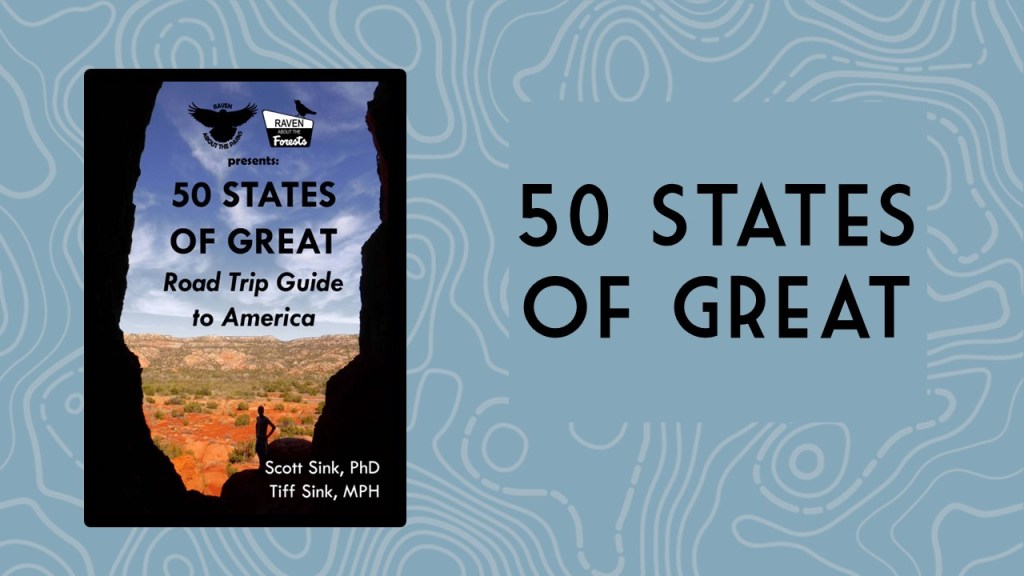
Yesterday we published our newest guidebook to all 50 states available for sale on Amazon
In yesterday’s post we included the book’s Introduction and, as promised, today we are sharing a sample chapter on Delaware (proving the second smallest state in the U.S. has a lot to do).
We are also giving a presentation on road tripping in the U.S.A. at the Laramie County Library in Cheyenne, Wyoming. It will be held in the Cottonwood Room (1st floor) at 7 p.m. on Tuesday, December 5, 2023. We will have all our books for sale before and after the talk and would be happy to sign them for you. We hope to see you there!
Delaware
1,247,066 acres (0.06%)
Statehood 1787 (1st)
Capital: Dover
Population: 989,948 (45th)
High Point: Ebright Azimuth (449 feet)
Name Origin
Delaware is named for the bay christened in 1610 by British Captain Samuel Argall for Thomas West, the third Baron of De La Warr (and Governor of Virginia, although he never stepped foot there).
Nickname
The First State won the race to ratify the U.S. Constitution on December 7, 1787 inside Elizabeth Battell’s Golden Fleece Tavern in Dover.
Background
Delaware was settled by the Dutch in 1631 (see Unique Museum) and the Swedish seven years later, then dominion changed hands multiple times over the years until the British established it as part of Pennsylvania in 1664. The state has the strangest borders of all with the straight lines laid out by Mason and Dixon in 1764 (see Maryland) and a curving northern border that follows a 12-mile radius arc from the spire atop New Castle Court House. However, that circle left a thin wedge of land before hitting Maryland’s eastern border, which was not fully granted to Delaware until Pennsylvania formally gave up its dispute in 1921. Delaware is often called the “Nation’s Summer Capital” since many politicians and government officials vacation around its Atlantic coast to escape the muggy weather in Washington, D.C. Much of the state’s 381 miles of coastline along Delaware Bay are protected as State Parks and National Wildlife Refuges. The capital is home to the Dover Green, Monster Mile, John Dickinson Plantation, and an Air Force Base where the free Air Mobility Command Museum is open to the public without passing through a security checkpoint.
Must-Do Activity
Originally laid out by Quakers in 1731, Wilmington is the state’s largest city and much of its history is tied to one family: the DuPonts. Pierre Samuel du Pont de Nemours fled the French Revolution to settle in the Brandywine Valley in early 1800s. Éleuthère Irénée du Pont and his two sons started a successful gunpowder business allowing the family to put money into constructing public schools and museums. They also built lavish mansions like Nemours, Winterthur, Gibraltar, Eleutherian Mills, and Longwood (in Pennsylvania). Similar to California’s Hearst Castle, there are multiple tour options to explore 175-room Winterthur, which became a museum in 1951 with a 60-acre outdoor garden, Enchanted Woods, 1830s general store, tram ride, and Touch-It Room for kids. The Hagley Museum and Library is located on the 235-acre site of the original Du Pont mills, and exhibits a fully-functional 1875 machine shop, patent models, and many historic structures. Today the du Pont family is closely associated with the chemical research company they started, known for inventing polymers like nylon, neoprene, Teflon, Mylar, Kevlar, Nomex, and Lycra. Wilmington is also home to the Delaware Art Museum, 178-acre Brandywine Park designed by Frederick Law Olmsted, Delaware History Museum, gilded Hotel du Pont that opened in 1913, DuPont Environmental Education Center, Delaware Center for the Contemporary Arts, and a historic riverfront shopping district.
No National Forest, So Try This Instead
Approximately 1.5-million birds fly over Delaware annually on the Atlantic Flyway migratory route. Some species, like bald eagles, overwinter in 15,978-acre Bombay Hook National Wildlife Refuge near where the Delaware River opens into the Atlantic Ocean. The Migratory Bird Festival is held here every May, when more than 250 species of birds can be spotted. Not coincidentally, this is the same month that horseshoe crabs come ashore to lay their eggs that are eagerly devoured by migrating shorebirds. The refuge was established in 1937 and the next year the Civilian Conservation Corps came in to plant over 50,000 trees, build a dike to create three freshwater impoundments, and construct several buildings. Now there is a 12-mile driving tour, plus five walking trails including the popular Boardwalk Trail and one that leads to a 30-foot-tall observation tower above Shearness Pool. Bombay Hook National Wildlife Refuge was featured on the state’s quarter in the America the Beautiful coin series, which depicted a great blue heron and great egret in a salt marsh. Further south near Rehoboth Beach, 10,144-acre Prime Hook National Wildlife Refuge was established in 1963 to protect marshes, woodlands, ponds, and Fowler Beach, an official sanctuary for horseshoe crabs. The refuge has a small visitor contact station with an excellent gift shop and the nearby Cape Henlopen State Park (see Backpacking Destination) has the Seaside Nature Center with a touch tank, five huge fish tanks, and osprey nest cam.
National Parks: none
Only National Park Service Site
Delaware was the last of the 50 states to gain a National Park Service (NPS) site. Finally in 2013, First State National Historical Park was created from a group of buildings associated with Delaware being the first state to ratify the U.S. Constitution on December 7, 1787 inside The Golden Fleece Tavern in Dover (see photo). The tavern is long gone, but you can still read the marker on the corner of State Street when you visit the lovely Dover Green, which is surrounded by photogenic red-brick buildings. The NPS does not yet have a visitor center at any of the multiple sites across the state and relies on its partners to provide tours and information. Less than an hour’s drive north of Dover, we recommend you take a tour inside the historic New Castle Court House where the legislature met from 1732 to 1777. The New Castle Court House occasionally still holds minor court proceedings and flies the flags of the Netherlands, Sweden, Great Britain, and U.S. Outside on the historic New Castle Green stands a statue of William Penn, who is considered the founder of Delaware since it was part of Pennsylvania until 1776.
Most Scenic Drive
Highway 1 is a coastal road that runs north on Fenwick Island from Ocean City, Maryland to the Delaware border where three miles of the barrier island are protected as Fenwick Island State Park. This is the beginning of 28 miles of beautiful beaches that end at Cape Henlopen State Park (see Backpacking Destination). Across the Indian River Inlet the road enters Delaware Shores State Park, which encompasses six miles of coast with a campground, beach volleyball nets, and beaches perfect for surf fishing, clamming, horseback riding, and surfing. The most developed area for tourists is around Rehoboth Beach, with its historic boardwalk lined by arcades and saltwater taffy stands, plus Funland amusement park and Jungle Jim’s water park. It also hosts a jazz festival, sandcastle contest, independent film festival, Halloween festival, and Championships of Skimboarding at nearby Dewey Beach.
#1 Roadside Attraction
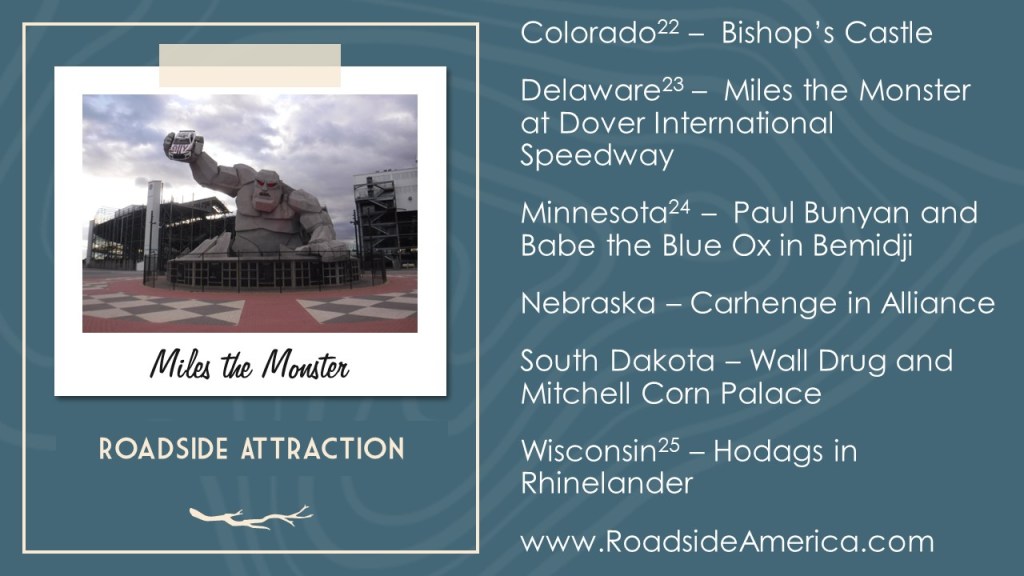
Dover International Speedway hosts auto races throughout the year, but is best known for its two annual NASCAR events held here since 1969. This racetrack is known as the Monster Mile, and has a sculpture of 46-foot-tall Miles the Monster out front for photo-ops (see photo). The imposing gray beast has red-eyes and is crushing a full-size stock car in his right hand. Before the cars start running, visitors can get up close to them in the FanZone. Miles the Monster is available for photos year round by parking at the gates off Dover Leipsic Road.
Unique Museum
The town of Lewes was founded in 1631 just west of Cape Henlopen (see Backpacking Destination), but its Dutch colonists lasted less than a year before being massacred by the native Lenape. The Dutch returned in 1659 and built many cypress-shingled structures that still stand, including the Ryves Holt House that serves as the Lewes Historical Society’s visitor center. The town’s name at that time was Zwaanendael, which means “Valley of the Swans.” A maritime museum currently occupies the 1765 Cannonball House, struck during the British bombardment in 1813. It does not have to be open to see the cannonball lodged in the brick, as it is visible from the street. The free Zwaanendael Museum is located inside a stone building constructed in 1931 based on the city hall of Hoorn in the Netherlands (see photo). Exhibits cover a range of topics from the 1798 sinking of a British brig offshore to a foot-long Fiji merman, a common feature of sideshows where the top half of a juvenile monkey was sewn to the back half of a fish.
That’s So Delaware
Every September, Dover hosts the Amish Country Bike Tour when more than 2,000 cyclists tackle bike courses that range in length from 15 to 100 miles. Also known as “the ride for pie,” the event begins behind a horse and buggy at the starting gun. It is best known for its rest stops with delicious snacks, including homemade pie. To top it all off, there is a huge barbecue for everyone at the end of the tour, regardless of how far you peddled.
Top State Park
Fort Delaware State Park is located on Pea Patch Island, accessed from Delaware City by a ten-minute passenger ferry ride then an even shorter trip on a small bus. According to legend, Pea Patch Island got its name because a ship full of peas sank on a shallow sandbar and the cargo washed ashore, sprouted, and eventually the roots collected more sand until the island now covers nearly two acres. The fort and its moat were built over twenty years starting in 1848, and during the Civil War the fort held 16,000 Confederate prisoners. Tour guides dress in historical clothing, as do the soldiers, blacksmith, and laundress, who will teach you how to use a washboard. In September, overnight tent camping is allowed on certain weekends, when there are nighttime scavenger hunts and fireside ghost stories. At an observation platform on the Prison Camp Trail, you can look out over the marshland where up to 5,000 herons and egrets nest in trees in summer.
Favorite Short Hike
Redden State Forest encompasses 44 miles of trails and an Education Center with exhibits on the importance of forestry in Delaware. It is spread across 18 separate tracts covering 12,900 acres north of Georgetown on both sides of Highway 113. The forest is open for hiking, biking, horseback-riding, and in-season hunting. It also has several buildings listed on the National Register of Historic Places: Ellendale State Forest Picnic Facility, Redden Lodge (built around 1903), the Manager’s House, and the Horse Barn, which opened in 2000 as the Education Center. The Redden State Forest Loop Trail is very flat and covers 4.8 miles through stands of mixed hardwood trees.
Backpacking Destination
We searched all over Delaware for a place that allows backpacking, but it was the only state where we could not identify a single one. As an alternative, we recommend camping at one of the 159 campsites in Cape Henlopen State Park and exploring its trails during the day. The park’s hiking options include the Seaside Nature Trail, Walking Dune Hiking Trail, and Beach Loop Trail (closed in summer for piping plover nesting). The Junction and Breakwater National Recreation Trail is a 5.8-mile-long rail trail popular with bikers (the park has a Loan-a-Bike program) and passes through wetlands, forests, and farmland. The railroad used to take passengers between Lewes and Rehoboth Beach before being abandoned in the 1970s. To extend the hike you can connect to the Georgetown-Lewes Trail or the Gordons Pond Trail. If you are up for an epic backpacking trip, the beach here is the eastern terminus of the 6,800-mile American Discovery Trail. Cape Henlopen State Park’s other recreational opportunities include swimming, kayaking, kiteboarding, beachcombing, and climbing up the 83-foot-tall Observation Tower. While at the State Park, visit the Seaside Nature Center to see its touch tank and five 1,000-gallon fish tanks.
Cool Campsite
Trap Pond State Park encloses 3,300 acres, including a large stand of baldcypress trees. It was these trees that originally brought loggers here, so they excavated Trap Pond to power their sawmill. Following the cutting, the peat bogs dried out and wildfires blazed in the 1930s, including one that continued for eight months straight. At this point the federal government acquired the land and this area became Delaware’s first State Park in 1951. Today visitors can learn more history at the nature center before heading down the road to one of 142 tent and RV campsites. Canoeing is a popular activity, and the park offers the Cypress Point Trail boardwalk into the swamp and the 4.9-mile Loblolly Bicycle Trail (with a Loan-a-Bike program).
Wonderful Waterfall
Delaware does not have much vertical topography, which means its rivers slowly drop without the dramatic cliffs and falls found in other states. One place to see these cascading streams is Alapocas Run State Park, where the 1.8-mile Alapocas Woods Trail gains 226 feet of elevation and the Greenway Trail climbs 300 feet over four miles. At Brandywine Creek State Park, the River Loop covers about five miles and changes 250 feet in elevation, while Rocky Run Loop undulates up a cumulative 300 feet over three miles.
Today we published our newest guidebook to all 50 states available for sale on Amazon
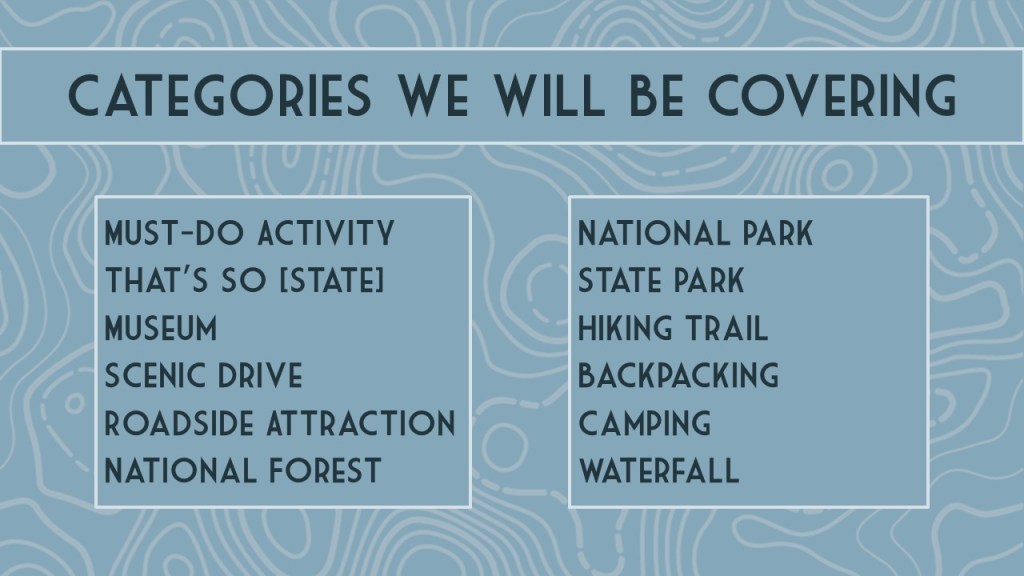
50 States of Great: Road Trip Guide to America is a starting point for planning a road trip of any length, covering the best of each state in 12 categories: scenic drive, State Park, museum, waterfall, roadside attraction, National Forest, campsite, and more. 50 States of Great is a culmination of our extensive travels through the United States of America seeking out well-known destinations and less-frequented spots. The goal of our book is to be useful whether you are taking a cross-country road trip or exploring your home state.
We are also giving a presentation on road tripping in the U.S.A. at the Laramie County Library in Cheyenne, Wyoming. It will be held in the Cottonwood Room (1st floor) at 7 p.m. on Tuesday, December 5, 2023. We will have all our books for sale before and after the talk and would be happy to sign them for you.
If you go to our book page on Amazon (https://amzn.to/3tZsK3K) click on the cover image to Look Inside. We have included the Introduction below and will post a sample chapter on this website tomorrow.
We love traveling in the United States of America (U.S.). We have driven hundreds-of-thousands of miles across the country while on dozens of road trips, plus three flights taken to Hawai‘i. Utilizing our expertise, we wrote this guidebook with the goal of helping readers plan a road trip to see the best of what each state has to offer. This informative book presents all 50 states in alphabetical order, with abbreviated chapters at the end on American Samoa, the District of Columbia, Puerto Rico, and the U.S. Virgin Islands.
In our travels, we have visited every state—at least twice. We have spent the night in all 50 states. Between the two of us, we have lived in ten different states from coast to coast (Alaska, Arizona, Arkansas, California, Colorado, New York, North Carolina, Ohio, Tennessee, and Wyoming—our current home of more than a decade). We have visited in person more than 90% of the locations mentioned in this guidebook and we are excited to see some of the ones we learned about during our research, as well as making it to the remote territories of Guam and Northern Mariana Islands. As the old saying goes: “We have not been everywhere, but it is on our list.”
In 2016, we took ten months off to celebrate the centennial of the National Park Service (NPS) by visiting a State Park and an NPS site in all 50 states. Since then, we have traveled to all 50 states again and three territories, including a special trip in 2022 just to say we finally overnighted in Rhode Island. After the COVID-19 pandemic, we completed our effort to take a hike in all 155 National Forests and all 20 National Grasslands. We are currently on quests to hike in at least one National Wildlife Refuge in every single state (19 down) and finish visiting each state capital (only two to go).
We never liked the idea that parts of the U.S. are considered “flyover country,” and not just because we prefer to drive when we travel. This book started as a way to highlight the attractions in the central U.S., then we realized we knew just as many hidden gems in the most “touristy” states. Relying on our first-hand knowledge, we selected a few must-see sites to visit in each of these 50 United States of America. [Historical note: It was not until the Civil War was fought to preserve the union in the 1860s that “these United States of America” began to be referred to as “the United States of America.”]
We created categories that focused on our areas of expertise, leaving hotels and restaurants to somebody better qualified to compare those businesses. Our categories became the headings for each state that are explained below.
Map
For each state we included an outline map with a star for the capital city and a triangle located at the high point.
Acreage
Not all states are equal in size, so we included the number of acres and the percentage of the U.S. that it covers.
Statehood
This is the year that state was admitted to the union and its number in sequence.
Capital
The city where the state capital resides is represented by a star on the map.
Population
Based on the 2020 census, we included total population and rank out of 50.
High Point
The name and elevation of the highest point in each state is listed, and its location is represented by a triangle on the map.
Name Origin
We briefly explain the often-mysterious etymology. Most state names come from the languages of American Indians, while others have European roots.
Nickname
Every state has a nickname (some of which have changed over time) and the origins of those names are sometimes convoluted.
Background
A catch-all heading that provides some history or glosses over the famous attractions to a particular state, like those in New York City or Las Vegas.
Must-Do Activity
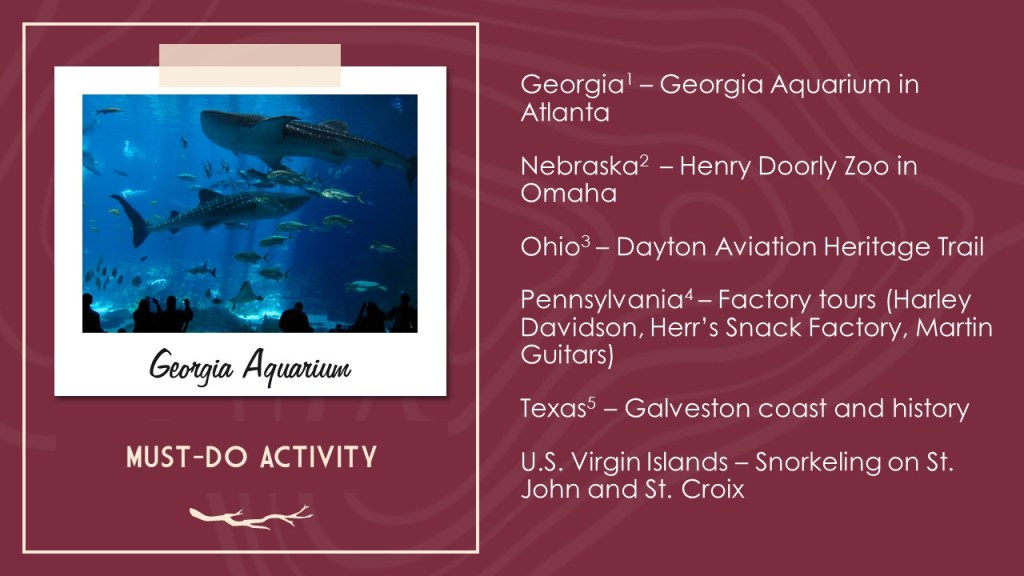
The one place to make sure to visit if you are only going to do one thing in a given state. Our choices range from a city to walk around, an outdoor activity to do, or a general type of attraction to focus on, each of which is essential to experience the best of what that state has to offer.
Greatest National Forest
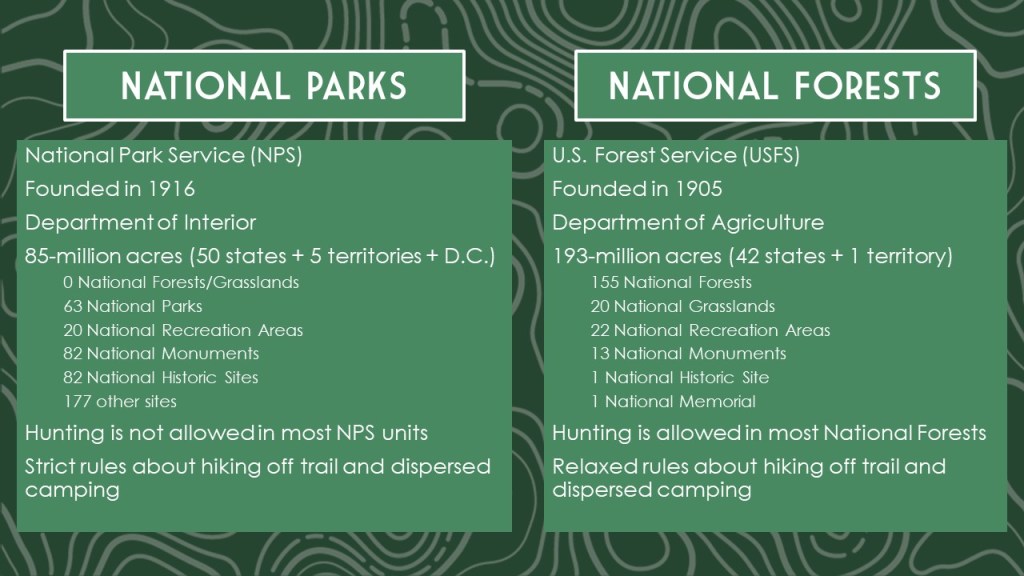
There are a few states with only one National Forest (and ten without any), which made the selection process easy, but others like California (with 19) were a real challenge to pick. For those ten states without, we chose a National Grassland, State Forest, or similar natural area. We gave equal space to all National Forests in our guidebook Out in the Woods: An Introductory Guide to America’s 155 National Forests.
National Parks
A simple list of each of the 63 National Parks that lie within that state’s border. For more information on each of these, check out our guidebook A Park to Yourself: Finding Adventure in America’s National Parks.
Best National Park Service Site
Excluding the 63 National Parks, we chose our favorite unit managed by the National Park Service from among the National Monuments, National Historic Sites, National Memorials, and other classifications.
Most Scenic Drive
States designate specific roads as “Scenic Byways,” but we did not limit our choices to the official ones. We have driven hundreds-of-thousands of miles on vacations, so we have a feel for what makes an interesting route.
#1 Roadside Attraction
There are entire websites dedicated to roadside attractions and we cannot claim to have been to even half of them. However, we try to break up our drives with interesting stops, some of which take longer to visit than others.
Unique Museum
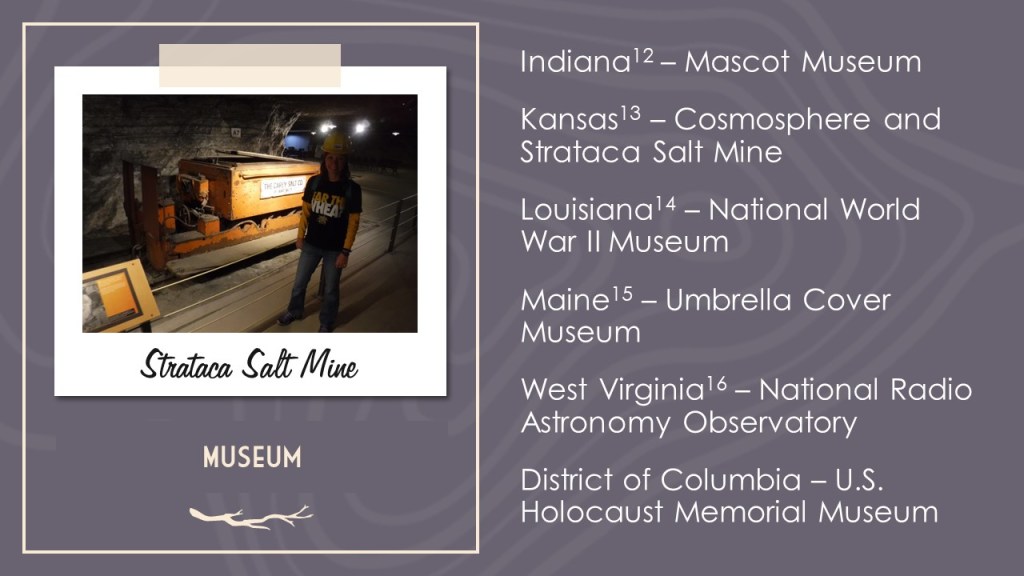
There are thousands of museums across the U.S. covering art, science, history, and everything in between. We would not argue that these are necessarily the best museums in each state, only that they were unique enough to get our attention.
That’s So [State Name]
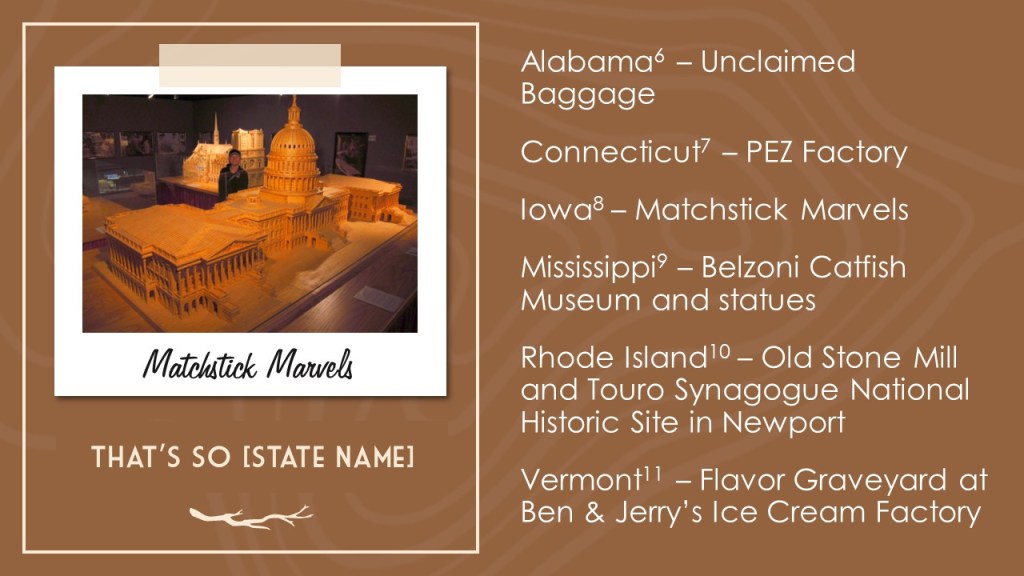
In our research, we came across patterns of similar attractions in a specific state or someplace exceptional that could exist only in one state. This became our catch-all heading for fun spots that did not seem to fit elsewhere.
Top State Park
All 50 states have State Parks and we have visited at least one in each state. We often highlight State Parks under other headings, but here we focus on one that stands out above the rest.
Favorite Short Hike
There are so many hiking trails and websites dedicated to them that it is often hard to choose a destination. We guarantee that if you take the trail we picked that you will get a good feel for that state.
Backpacking Destination
We love backpacking and have read more about these remote destinations than any other areas. Our experience on the East Coast is limited, but we did find at least a one-night excursion for all 50 states.
Cool Campsite
We have camped in nearly every state, but usually not in a campground. We prefer dispersed camping on public lands, like those run by the U.S. Forest Service and Bureau of Land Management. Here we focused on unique spots for pitching a tent that sometimes require boating, backpacking, or riding a train (see West Virigina).
Wonderful Waterfall
Waterfalls are some of the most popular destinations for hikes and drives. However, due to topography some states are more blessed with options than others. Our choice is not always the tallest or busiest, but we think you will not be disappointed if you go.
***
For trip planners, thick guidebooks can often be overwhelming and travel websites are usually more interested selling something than providing any useful information. Our research method usually starts with reading the short descriptions found in free tourist pamphlets or book series like Off the Beaten Path, and then further investigating those places on the internet. State Parks, National Forests, and National Park Service sites typically have useful information on their websites and apps. We apologize for any out-of-date content, as there may have been significant changes to some of the attractions since 2020. A wealth of data on specific destinations and hiking trails is available free online, often with detailed directions on how to get there. Check these frequently-updated websites first before visiting anywhere in our guidebook since they can close due to various economic and natural disasters.
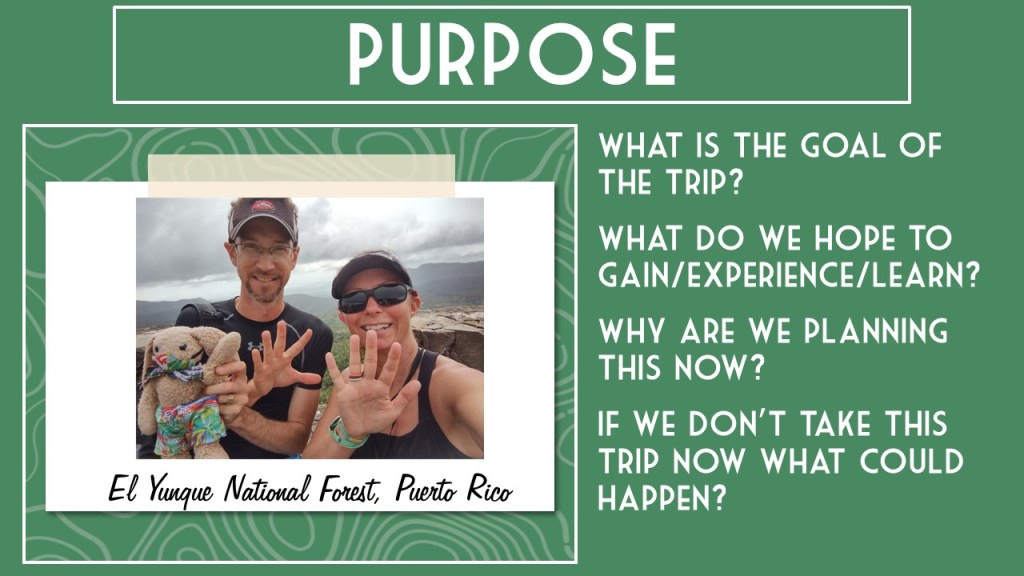
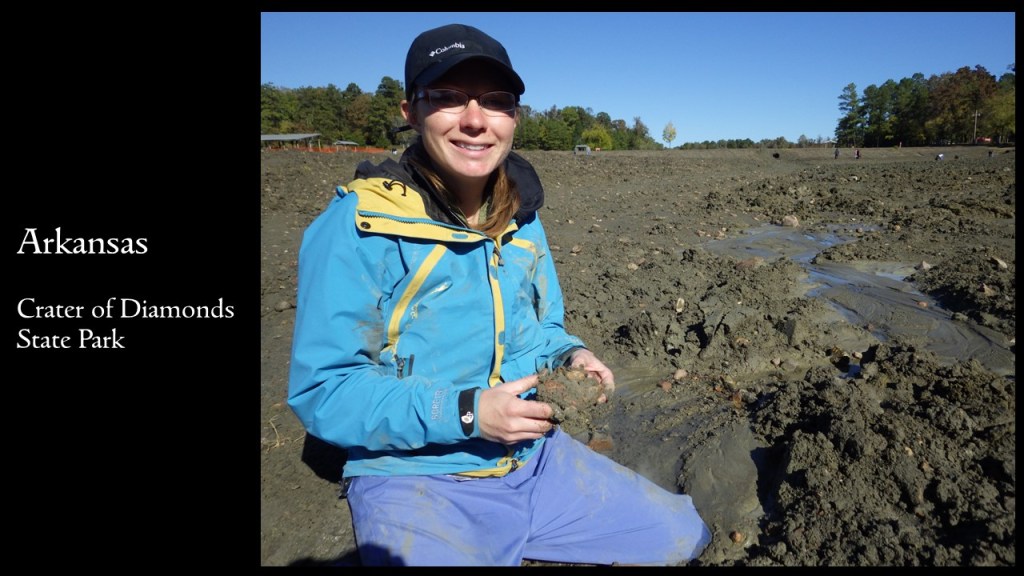
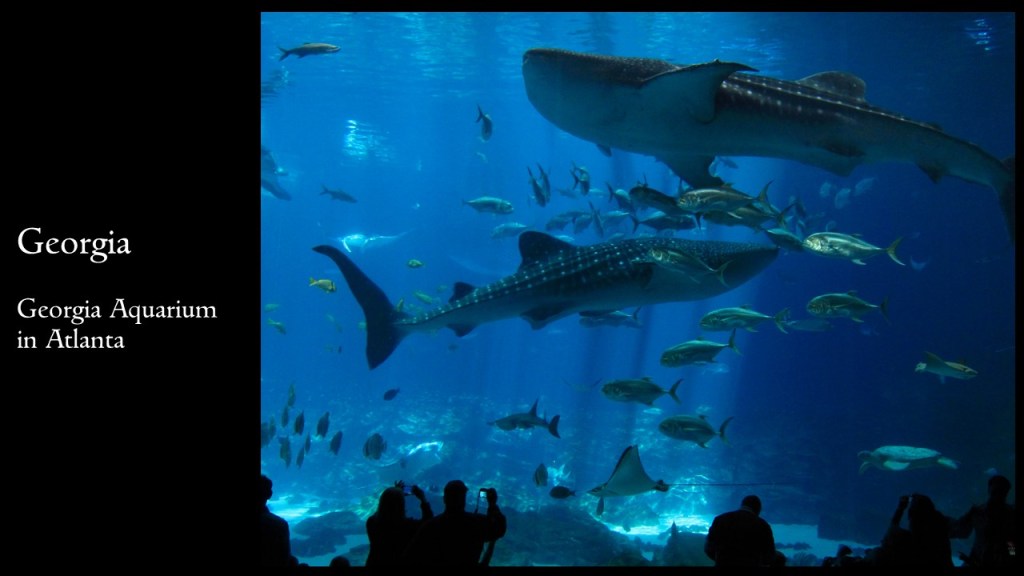
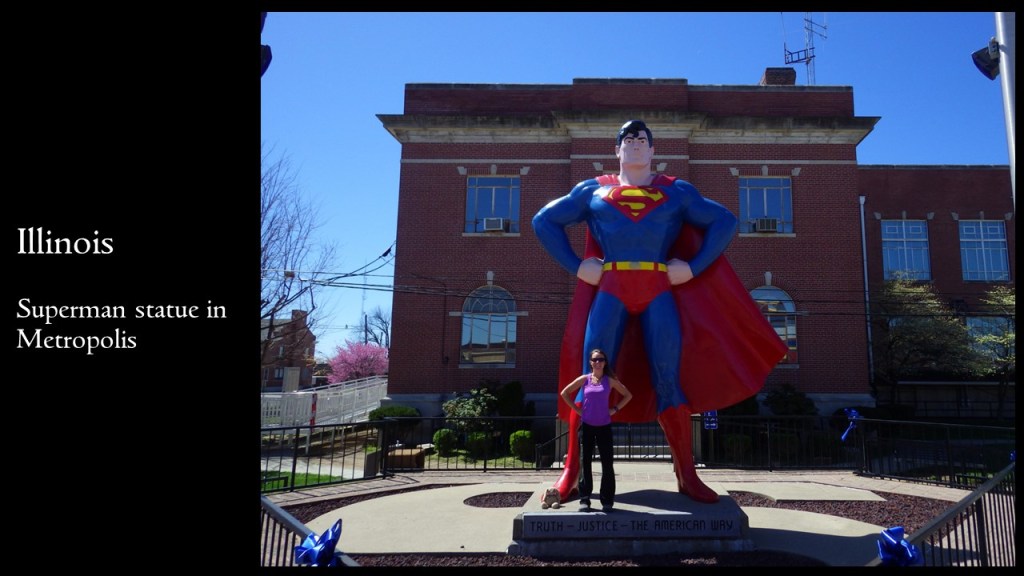
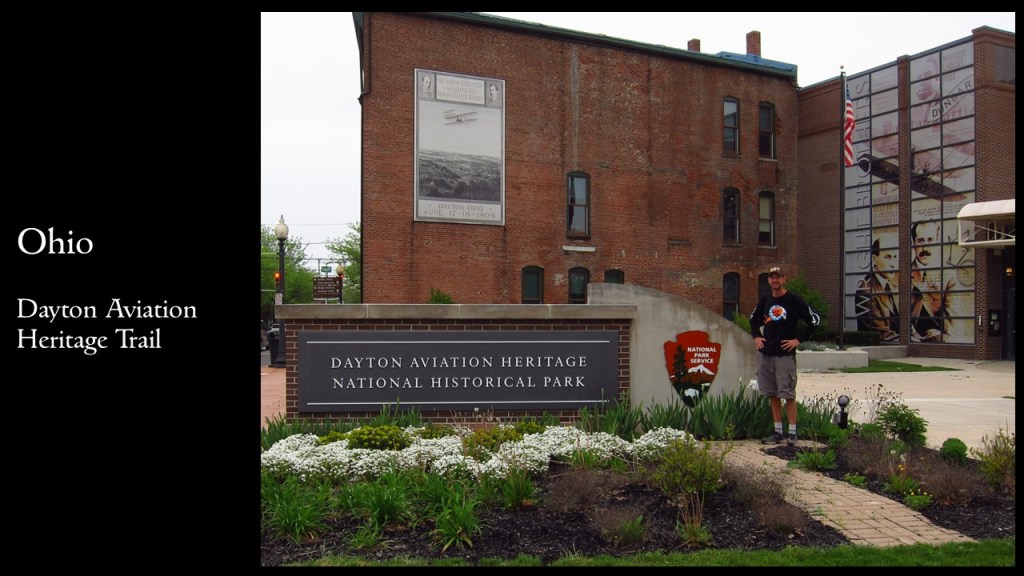
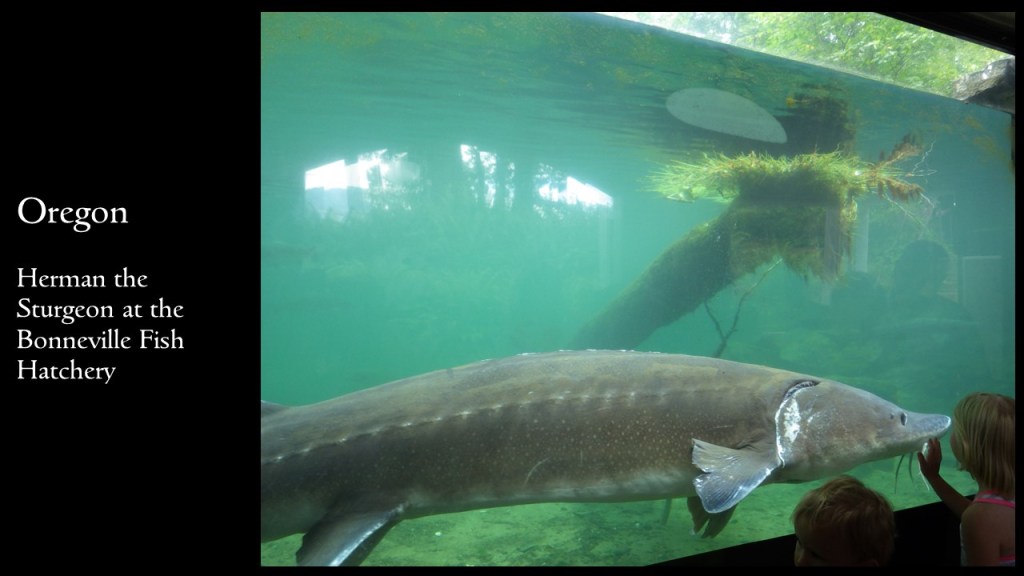
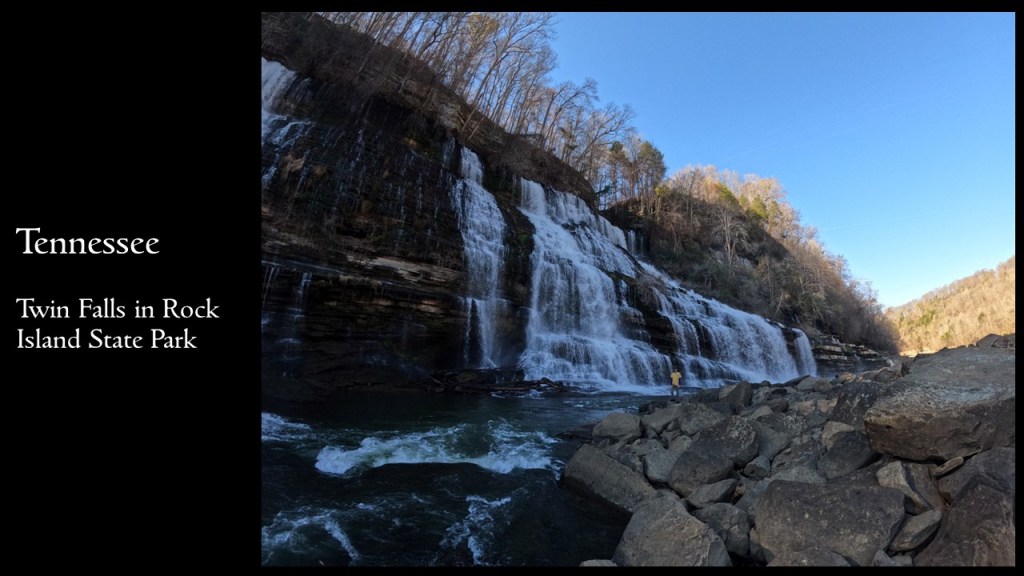
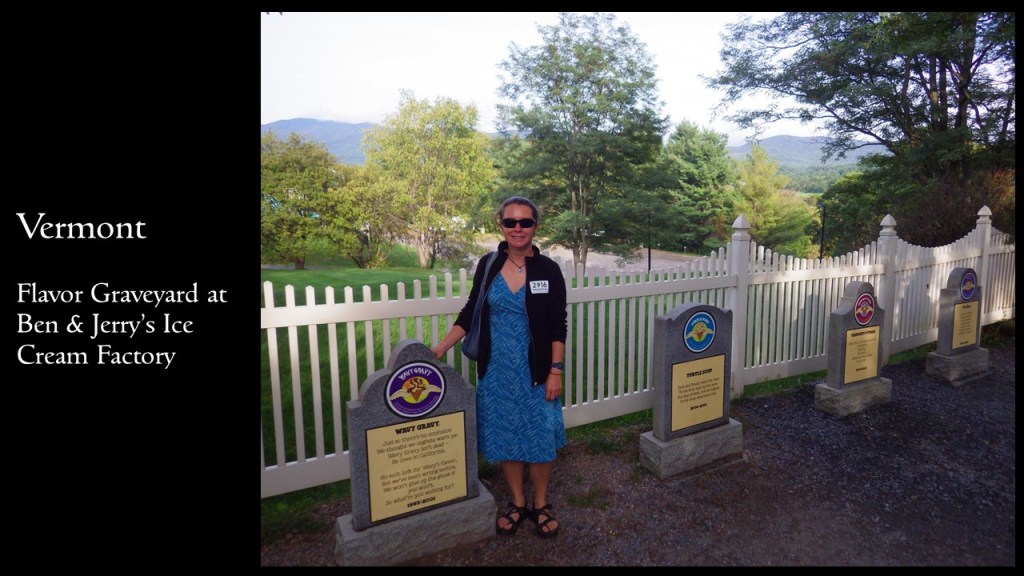
For each state, we selected two original photographs by the authors from a place discussed in the headings above. We limited the number of photos from National Parks and National Forests as those can be found in our other guidebooks. You might notice our stuffed animal named Wondon in a few of the photos since he has his own travel blog (WondonBuns.blogspot.com).
All illustrations are original drawings by Scott based on photographs we have taken. We selected an animal found in each state to represent it, allowing for some duplicates. Scott’s illustrations from this book are available on a variety of products on our travel website (RavenAboutTheParks.com).
We hope that 50 States of Great provides inspiration for your own explorations of the United States of America.
Adventure on!
-Scott and Tiff
Cheyenne, Wyoming
October 2023
We are a participant in the Amazon Services LLC Associates Program, an affiliate advertising program designed to provide a means for us to earn fees by linking to Amazon.com and affiliated sites.
Nearly 25% of Gila National Forest is designated Wilderness, and the renowned Gila Wilderness became the world’s first such-titled area on June 3, 1924. There are multiple hot springs that attract backpackers to this area and 95% of thru-hikers on the Continental Divide National Scenic Trail (CDT) veer from the official route to enjoy its beauty. The nearby Aldo Leopold Wilderness is named for the Forest Service ranger that helped campaign for that designation and later became a famous ecologist and author of A Sand County Almanac (see our Top 10 Non-Fiction Books on Trees and Forests). In 2016, the Cosmic Campground became the first International Dark Sky Sanctuary in North America (and one of only 18 in the world), so it is a great spot for stargazing. Gila National Forest also manages the part of Arizona’s Apache National Forest that is in New Mexico, adding an additional 614,202 acres.
Highlights
Inner Loop Scenic Byway, Hulsey Lake, Cosmic Campground, Turkey Creek Hot Springs, Lake Roberts, Signal Peak, Quemado Lake, Chimney Rock Canyon, Jordan Hot Springs, Sawmill National Recreation Trail, Catwalk National Recreation Trail, Wood Haul Road National Recreation Trail, Continental Divide National Scenic Trail
Must-Do Activity
You do not have to journey far into the Gila Wilderness to reach Lightfeather Hot Springs on the Middle Fork Trail. Less than a mile down the trail a shallow pool is formed by stacked rocks where 150-degree hot springs water combines with the cool Middle Fork of the Gila River. It is a great place to watch and listen to wildlife. Seven miles further is Jordan Hot Springs, a very popular backpacking destination that requires countless stream crossings (it is best to wear fast-drying shoes and use trekking poles). The trailhead is located 43 miles north of Silver City on the Inner Loop Scenic Byway, not far from a visitor center co-managed by the Forest Service and National Park Service (that operates nearby Gila Cliff Dwellings National Monument). The Gila Wilderness is the reason this National Forest made it on our list of the Top 10 National Forests for Backpacking.
Best Trail
The most popular spot in Gila National Forest is the Catwalk National Recreation Trail, which requires driving through two stream crossings that are doable by a passenger car when the water is low. The one-mile trail is partially elevated above Whitewater Creek on wide, steel grates complete with handrails. The Catwalk started in 1893 as a way for miners to service a four-inch water pipe, then fell into disrepair before being upgraded by the Civilian Conservation Corps (CCC) in 1935. Today’s safer, tourist-friendly Catwalk was installed in 1961. This trail made our list of the Top 10 Day Hiking Trails in National Forests.
Watchable Wildlife
The Gila River gives its name to this National Forest, as well as animals like the venomous Gila monster, Gila woodpecker, and fish, including a trout, topminnow, and several species of chub. Mexican wolves have been reintroduced to this region, and other predators like mountain lions, bobcats, and black bears (we saw one and followed another’s wet footprints while backpacking near Gila Cliff Dwellings National Monument). Unique mammals include the javelina (collared peccary), gray fox, white-nosed coatimundi, and Coues white-tailed deer. Mule deer, elk, pronghorns, and bighorn sheep are additional ungulates found in Gila National Forest. Large birds include roadrunners, Mexican spotted owls, bald eagles, ospreys, peregrine falcons, and wild turkeys. Most of our wildlife encounters were with reptiles like horned lizards (a.k.a. frogs or toads), western fence lizards, and rattlesnakes.
Instagram-worthy Photo
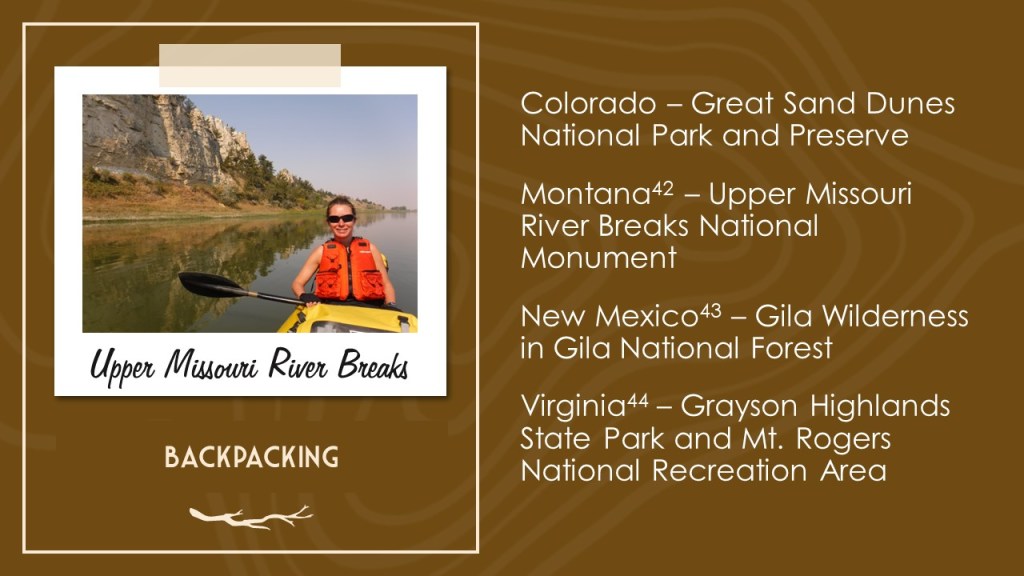
In May 2020, we did a 72-mile backpacking loop connecting the West Fork of the Gila River with the Middle Fork, through gorgeous canyons and old-growth forests protected as the Gila Wilderness since 1924.
Peak Season
Summer
Fees
There is a parking fee at Catwalk National Recreation Trail (or you can display an America the Beautiful Pass), but some cars parked across the river to avoid paying.
Road Conditions
The eastern part of Inner Loop Scenic Byway is paved to the visitor center co-managed by the Forest Service and National Park Service, but the western portion is unpaved and has some steep grades not recommended for RVs. The unpaved road to Catwalk National Recreation Trail with its two stream crossings is doable with a passenger car when the water is low.
Camping
Cosmic Campground became the first International Dark Sky Sanctuary in North America (and one of only 14 in the world), so it is a great spot for stargazing. Pueblo Park Campground offers a trail through Chimney Rock Canyon and Upper End Campground is near 72-acre Lake Roberts. Cottonwood Campground is located near the Blue Range Wilderness on the Arizona border. In eastern Gila National Forest along Highway 152 are found both Upper Gallinas and Iron Creek Campgrounds. In the north, there are three campgrounds on 131-acre Quemado Lake and the Continental Divide National Scenic Trail cuts through primitive Apache Creek Campground.
Overlooking the Gila WildernessWestern fence lizardLightfeather Hot SpringsTiff on the Catwalk National Recreation TrailTiff on the Catwalk National Recreation TrailTiff backpacking in the Gila WildernessScott backpacking in the Gila WildernessRuins in the Gila WildernessTiff backpacking in the Gila WildernessBullfrogNew Mexico locust in bloomThis ponderosa pine was still alive despite its fire scarElkBlack bearRattlesnake
Explore More – Gila is a Spanish simplification of the Yuma word “hah-quah-sa-eel,” translated as what?
Learn more about this and the 154 other National Forests in our new guidebook Out in the Woods
We are a participant in the Amazon Services LLC Associates Program, an affiliate advertising program designed to provide a means for us to earn fees by linking to Amazon.com and affiliated sites.
Start your U.S. National Forests, National Parks, and National Monuments adventure here!